School-Going Children Initiative
Our flagship — and the whole of what we do today. Fully sponsored, multidisciplinary care delivered where the children already are.
Healthcare at the school
Enrolment in Uganda is near-universal. Completion is not: of the 1,880,000 children who entered Primary One in 2016, only 832,659 reached Primary Seven. Every year, millions of Ugandan children are kept out of class by preventable illness — malaria, untreated dental problems, malnutrition, skin infection and menstrual health challenges.
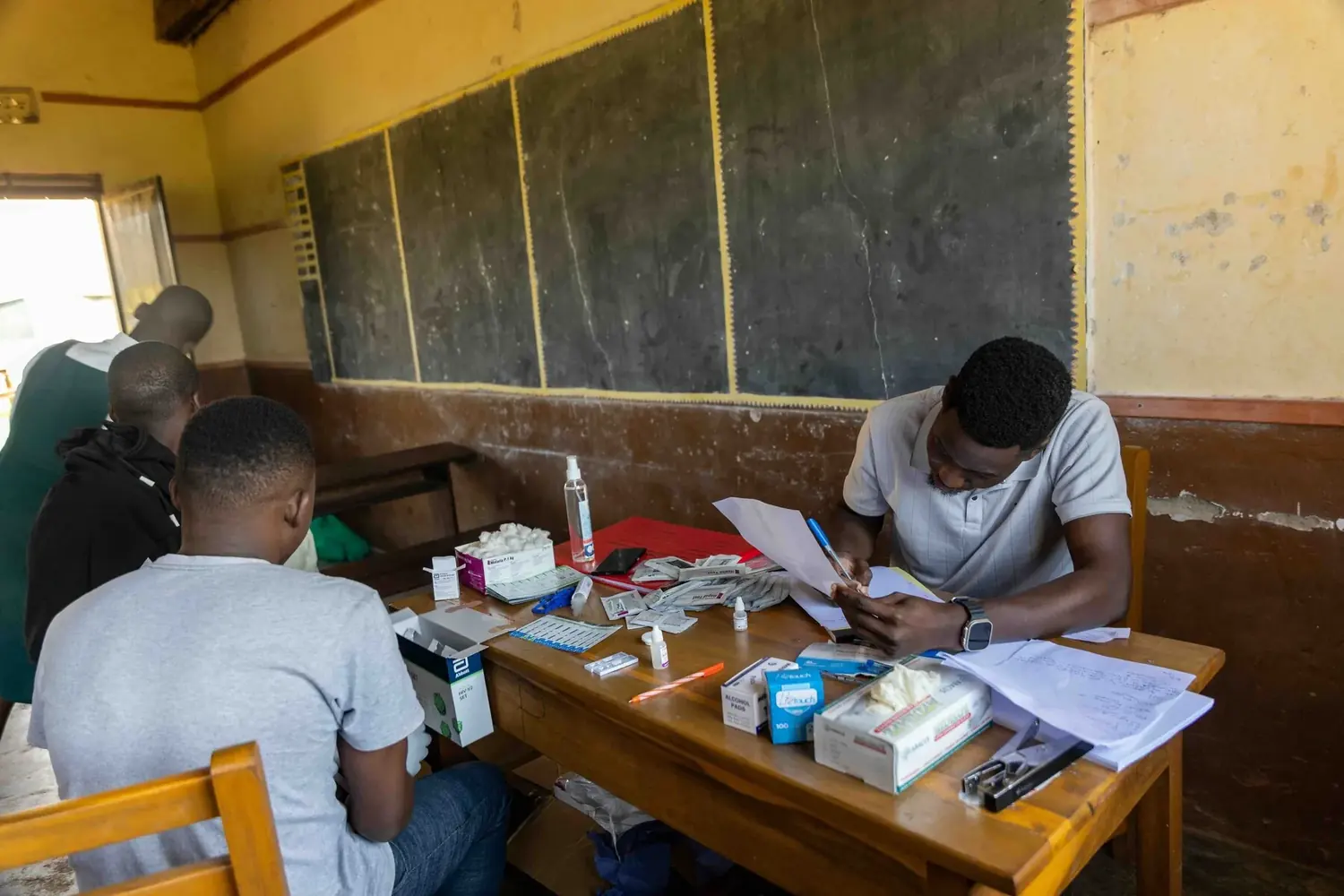
Today we deliver care through mobile outreach camps run on school grounds by a rotating team of trained healthcare professionals, following the same sequence every time: health education, prevention, screening, treatment and referral.
Our Year-1 goal is to equip two fully-fitted mobile clinic units so this care reaches many more schools across Uganda, keeping children healthy, present and learning.
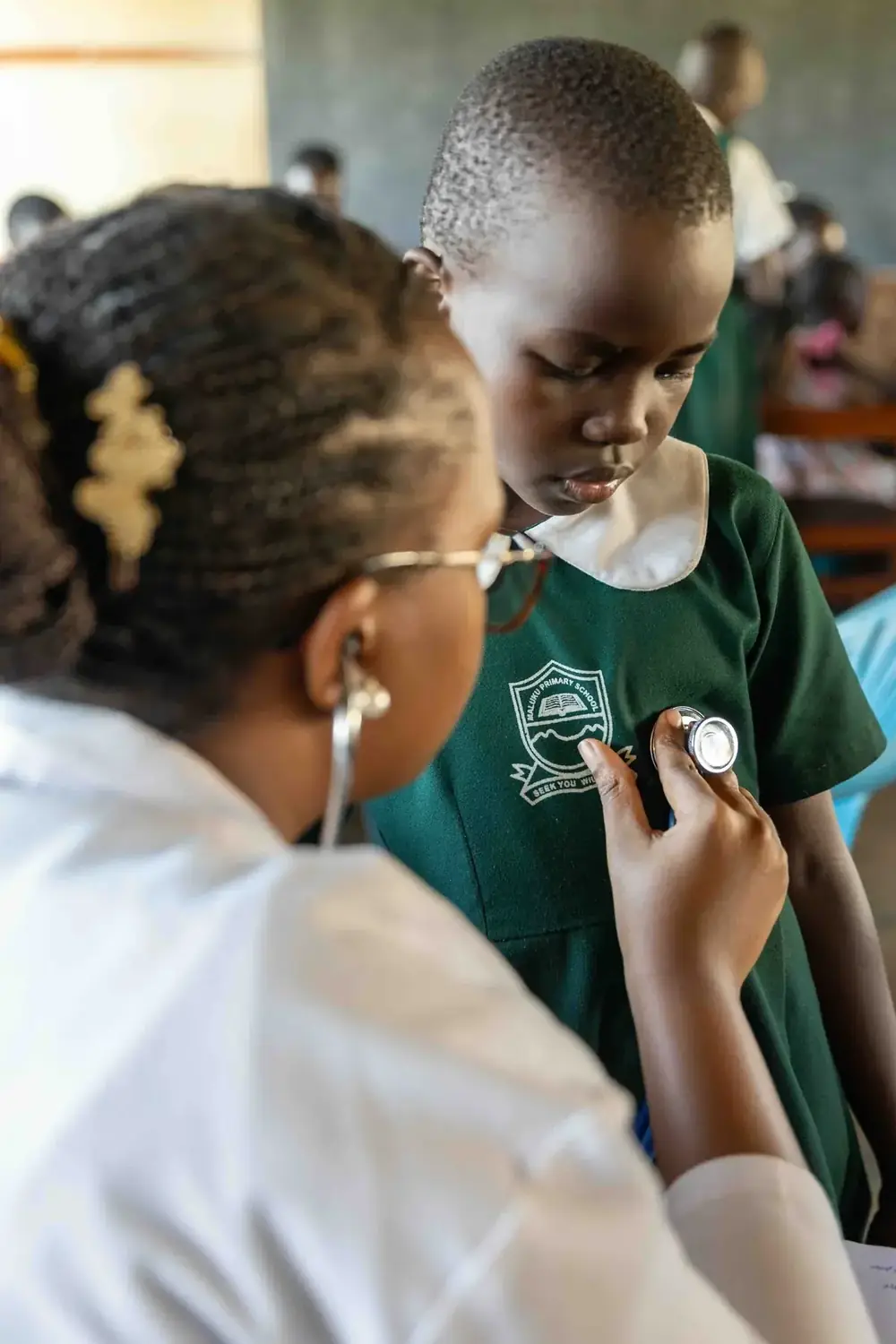
One stop for the whole child
- ✓Health education for prevention — hygiene, nutrition, menstrual health, SRH and mental health, with posters and health corners left behind in the school.
- ✓Health promotion supplies — hygiene materials and reusable sanitary pads, preventing infection rather than treating it.
- ✓WASH & waste management — safe water, handwashing, latrine hygiene and safe disposal of general and menstrual waste.
- ✓Routine & urgent screening across primary care, oral, eye, ear, mental and menstrual health — most of it currently undiagnosed.
- ✓Basic treatment on site — malaria, infections, deworming, immunisation and vaccination support.
- ✓Teacher and parent sessions — health education plus mental health dialogues for our secondary beneficiaries.
- ✓Structured referral into the public health system and to surgical partners for complex cases.
Why supplies and screening matter this much
Not one camp a term — a presence in the school year
School health should not be an event that visits once. We aim to be part of the ordinary rhythm of the school year, so that when Uganda talks about school health, it thinks of Healing Wheels.
Child Health Days · November
We join the national Child Health Days each November — mobilising schools and communities, supporting immunisation, vitamin A and deworming, and running our own screening alongside. We intend to do as many as we can reach.
Sports days & galas
First aid cover at school sports galas, athletics meets and inter-house competitions — and screening stations running on the touchline while the day goes on.
Music, drama & speech days
Health messaging built into the events schools already run, with posters, dialogues and a screening desk wherever pupils and parents gather.
What success looks like
Children reached
Of children screened receive treatment or referral
Cost per child / year
Mobile clinic units
These are Year-1 targets, not results. Coverage and treatment figures are drawn from our own health informatics records and reported to funders quarterly. We also measure illness-related absence against each school’s own baseline and will publish the result whether or not it favours us.

Keep a classroom healthy this term
Your gift puts a full day of care in front of children who would otherwise sit through lessons unwell.