

Six packages of care, delivered on every visit
One stop for the whole child — health education and promotion, screening, treatment and referral, in a single visit to the school. Scroll through what each package delivers.

Paediatric Primary Healthcare
Most of what empties a Ugandan classroom is affordable to prevent and affordable to treat — and almost never treated at school.
So every child can:
📈 The need: 14–64% of Ugandan pupils carry the malaria parasite — most without symptoms (Nankabirwa et al., 2014)
Adolescent Reproductive Health
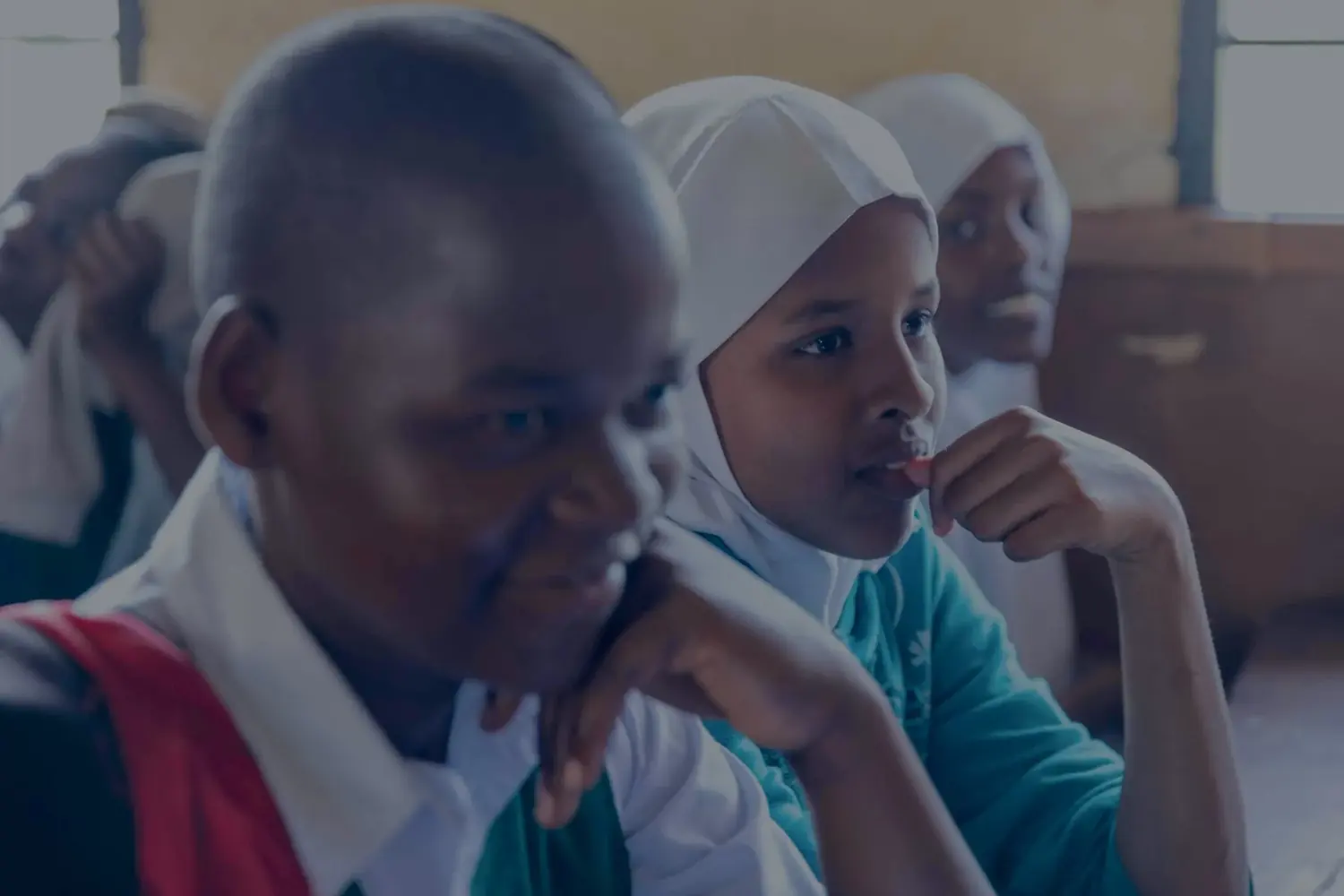
A pregnancy ends a schooling far more often than an illness does — and adolescents are reachable at school, not at a clinic.
So every teenager can:
📈 The need: ~1 in 4 Ugandan girls aged 15–19 have begun childbearing (UDHS 2022)

Menstrual Health & Hygiene
The conversation has been about pads for a decade. Pain is what actually keeps a girl at home — and pads do not treat pain.
So every girl can:
📈 The need: 32% higher odds of missing school per standard-deviation rise in menstrual pain (southern Uganda, 2025)

Child & Adolescent Mental Health
A pupil carrying untreated anxiety is marked present and learns very little. An attendance register cannot see this at all.
So every child can:
📈 The need: 27% of adolescents in sub-Saharan Africa experience depression; 30% an anxiety disorder
Immunisation & Vaccination
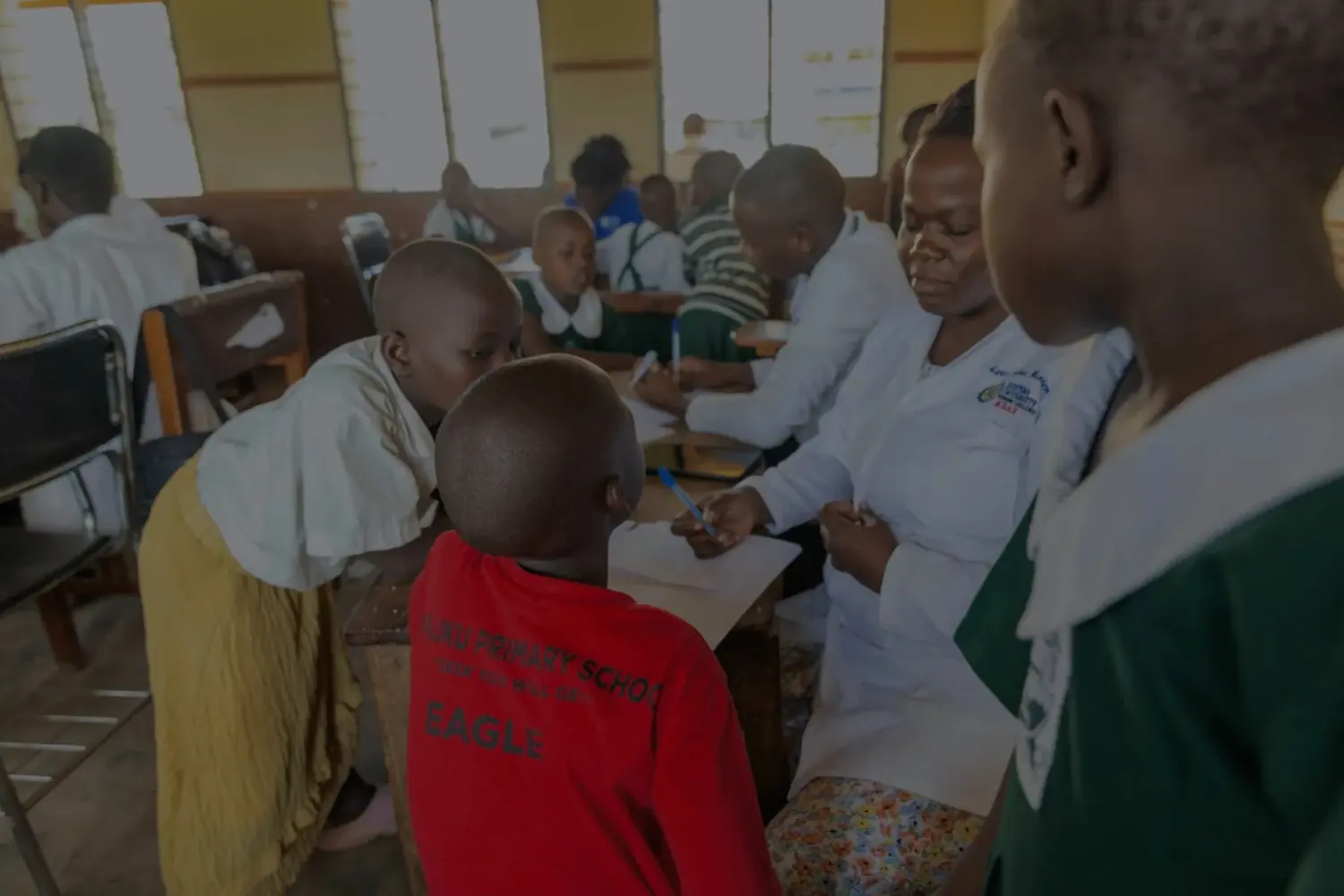
The dose is already funded. Reaching the child is the hard part — and that gets far easier when the vaccine comes to the school.
So every child can be:
📈 The need: 41% second-dose HPV coverage in Uganda against an 80% target — but over 95% where delivery was school-based
Health Informatics
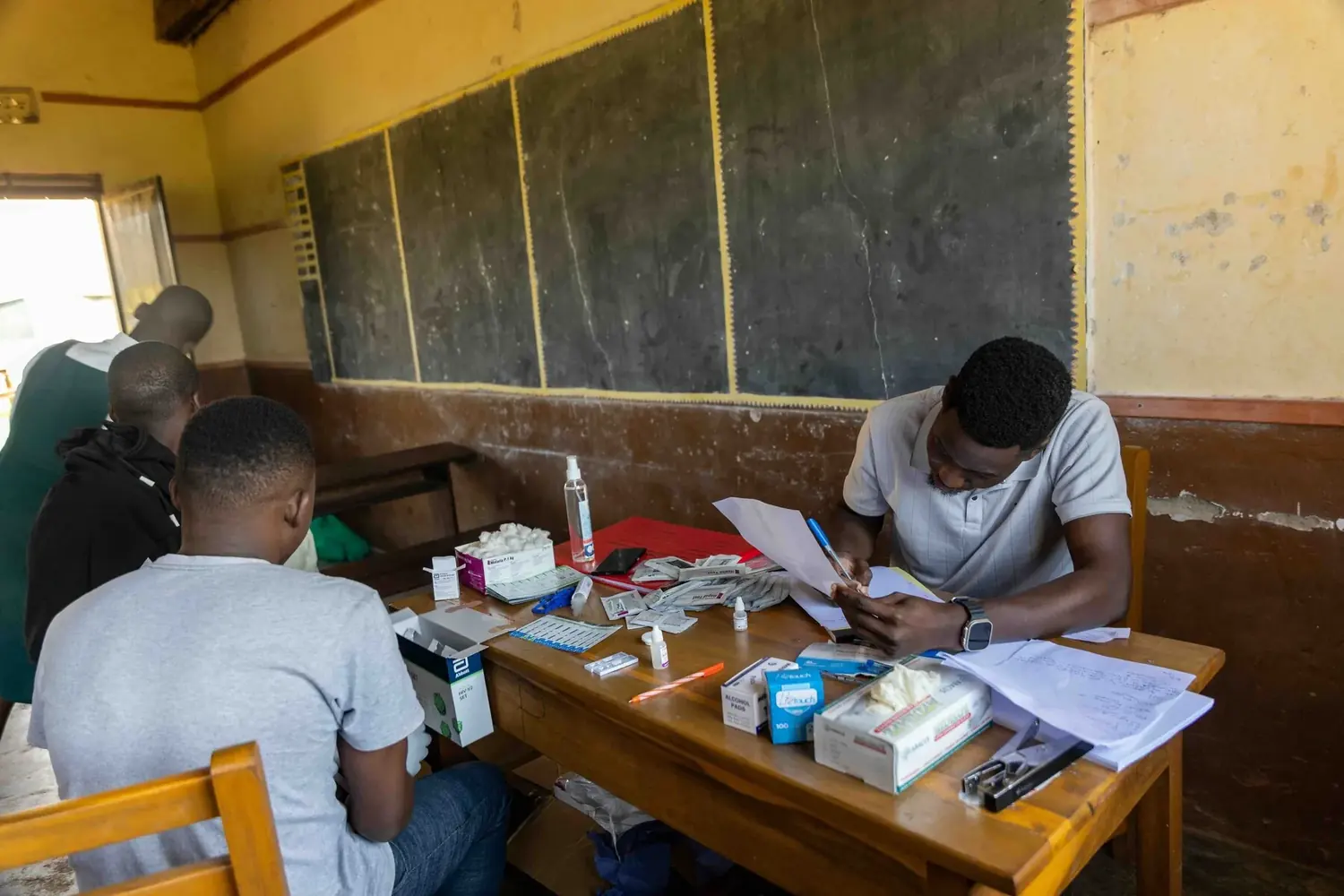
Medical camps have a long history of arriving, treating and leaving no trace. A screening no one can follow did not really happen.
So every visit can:
📈 The need: 100% of children seen receive a digital record, and every referral is tracked to completion
The conditions nobody is looking for
Toothache, a blocked ear and a blurred blackboard present as a pupil who is quiet, distracted or slow — often mistaken for a learning problem, and cheap to fix once found. All three sit inside the paediatric package.
Oral health
Caries affects a pooled 36% of twelve-year-olds across Africa, and 31.8% in Uganda report a history of toothache. Studies link tooth pain to lower achievement and higher absenteeism.
Ear, nose & throat
Otitis media affects around 8% of children across Africa. In Uganda 3.3% of primary schoolchildren have hearing loss — mostly the type a teacher never notices.
Eye health
12.6% of children across sub-Saharan Africa have a refractive error, yet spectacle coverage runs as low as 0%–22%. School vision screening is a safe, cheap way to catch it.
Sources: peer-reviewed systematic reviews and meta-analyses of oral, ear and eye health in African schoolchildren, alongside Ugandan district studies. Ask us for the full list.

Six packages. One visit. One child at a time.
Every package above is delivered on the same day, to the same child, for $13.21 a year.